The ‘No-Gym’ Hiker’s Training Plan
Anyone typing “how do I train for hiking” into a search bar wants a straight answer; not a gym sales pitch, six pop-ups, and a Reddit thread that ends in an argument.
For most day hikes or even weekend trips, you do not need a gym membership, a personal trainer, or a cupboard full of equipment. You need about 4 focused weeks, a staircase, a pair of shoes already worn in, and a willingness to put in the kilometres.
Hiking is wonderfully forgiving, but a steep descent, a long climb, or a trail that turns out to be “moderate” in brochure-speak can still leave your calves filing a formal complaint.
A little training beforehand can make your hike go smoothly, and it’ll leave you feeling great too.

A 4-week plan you can follow
Spending just 4 weeks walking a little longer than you’d usually walk in a day, climbing a staircase a few times, and carrying a little weight, is enough time for your legs to get used to the extra work out.
4 weeks before you set out on your trip, this is what you can do to get hiking fit:
| Week | Walks | Home strength | Goal |
| 1 | Three 30-minute walks | Two sessions: 10 chair squats, 10 calf raises, 20-second wall sit |
Build the habit |
| 2 | Three 45-minute walks, plus 15 minutes of stairs | Two sessions, three rounds each | Wake up the legs |
| 3 | Three 60-minute walks, one with a 3 kg backpack | Add 12 step-ups per leg | Practise carrying |
| 4 | One 90-minute walk with hills or stairs, plus two easy 30-minute walks |
One light session | Arrive fresh |
Stairs do the heavy lifting
Stairs are the closest thing to a hill you can find without leaving town.
They train the quads, glutes and calves that power you uphill, and, just as importantly, they teach you to control the way down.
Climb 10 flights at a steady pace twice a week, then add slow step-downs. Downhill sections load the knees differently from climbs, and controlled step-downs help prepare them for the “why is the bottom still so far away?” part of a trail.
Try three sets of 10 slow step-downs from a bottom stair. And if you don’t have access to steps, you can use a bench, a low wall, or a similar platform will do the job.
Shoes and socks come first
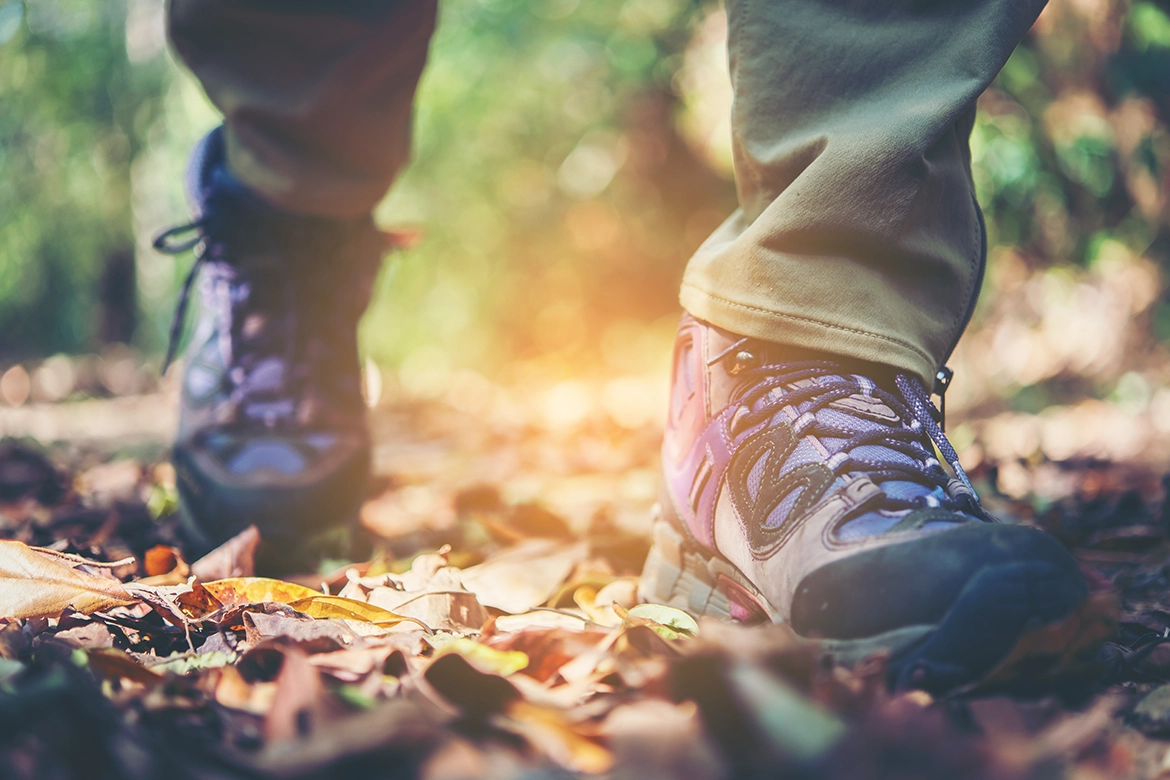
Footwear is the most important part of your hiking gear, because what you have on your feet can make or break your trip.
Wear your hiking shoes or trail runners for at least 20 hours of walking before the trip, because new boots and long descents are a famously bad combination.
And go for merino or synthetic-blend socks rather than cotton. Cotton holds sweat against your skin, which is exactly what blisters want. Pack plasters and a spare pair of socks; wet feet will change your mood faster than bad weather.
Water and snacks
For moderate hiking in moderate temperatures, you should be drinking about 500 ml of water per hour, increasing that amount in heat, on steep routes, or if you are a heavy sweater.
And instead of downing it in one go and getting a cramp, stick to sipping.
As for snacks, Harvard Health estimates that a person weighing about 70 kg burns roughly 216 calories in 30 minutes of cross-country hiking.
That is why snacks like biltong, roasted nuts, dried mango, bananas and a little chocolate all travel well. Pack slightly more than you think you need, especially anything salty.
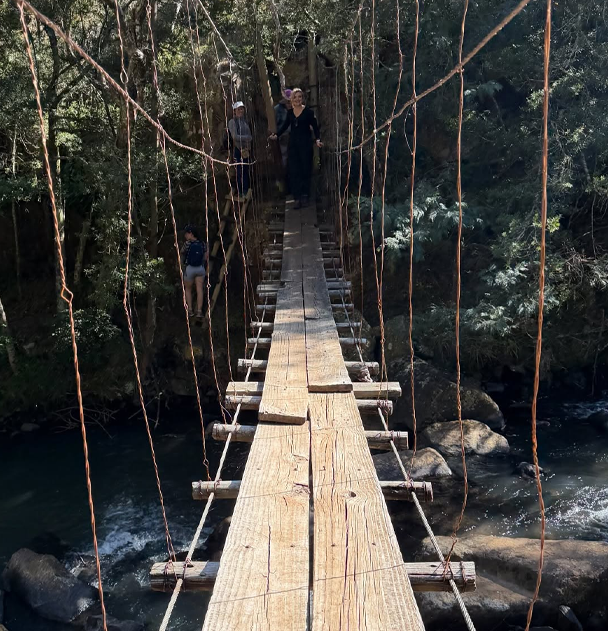
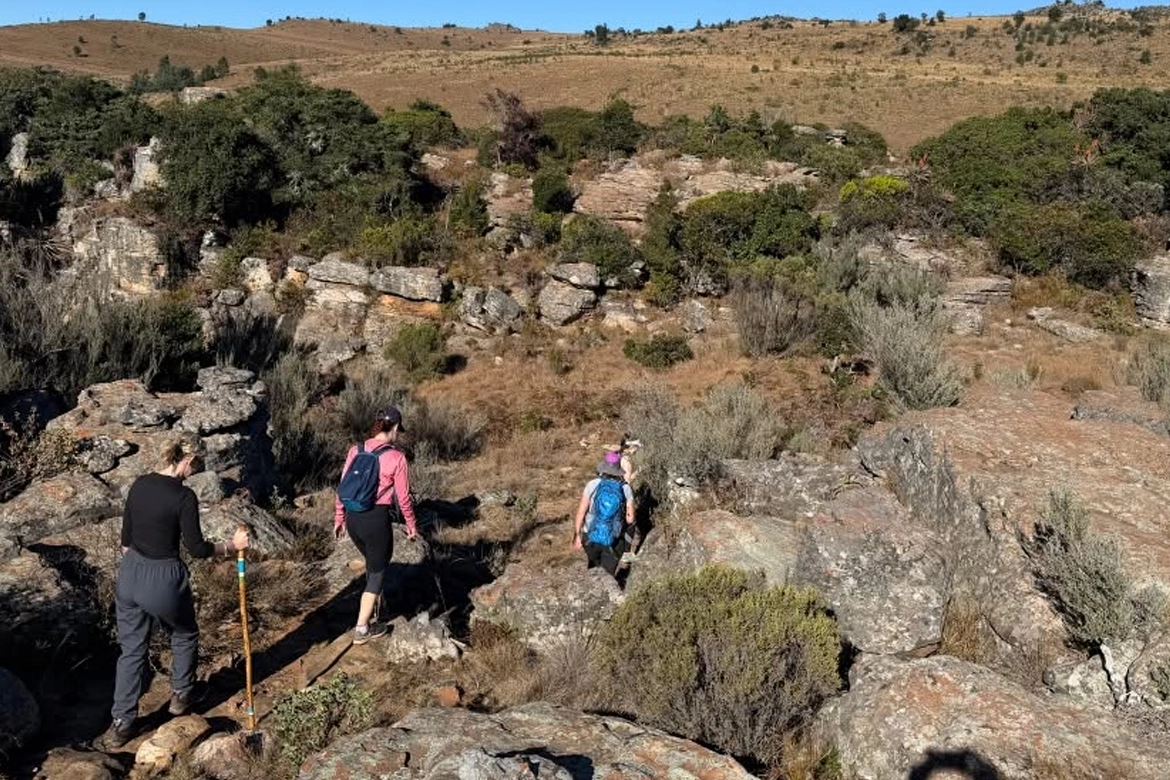
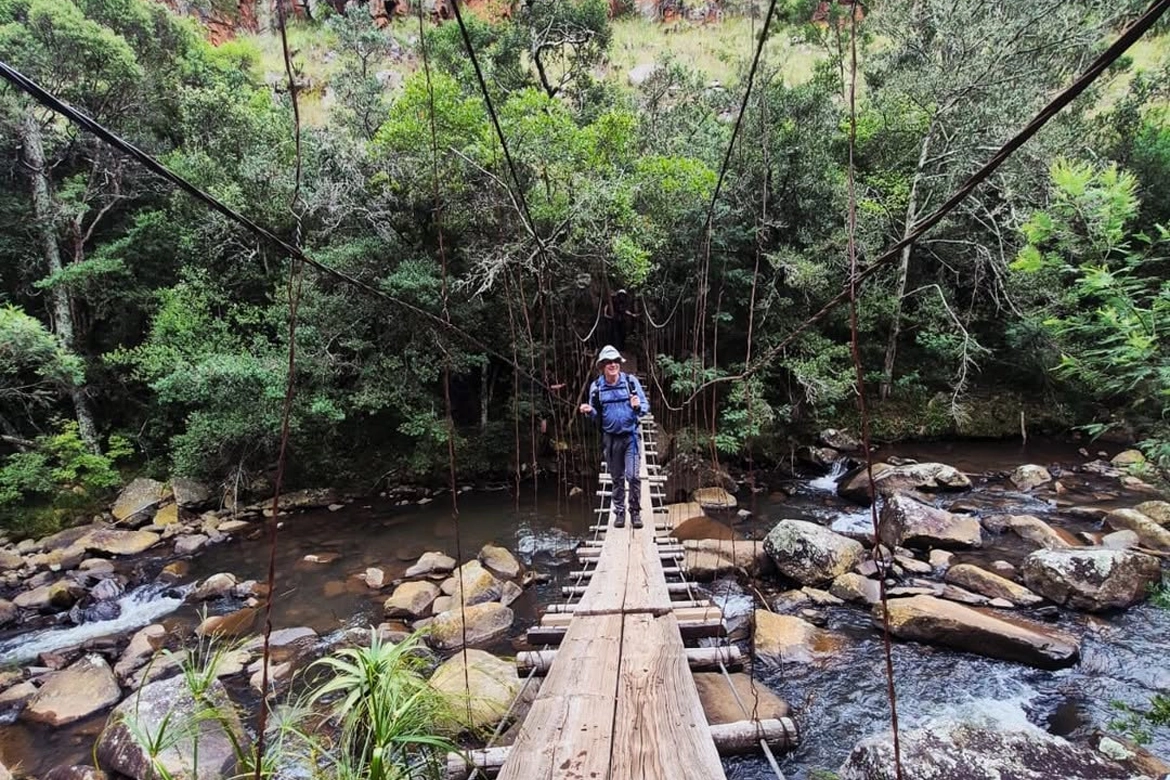
Test your fitness plan at Bermanzi
At Bermanzi, our hiking trails in Mpumalanga are perfect for all kinds of hikers and we are just the place for a peaceful weekend away. You can book your trip by sending us a message or giving us a call, and you can find out more about our trails and accommodation by checking out our website.