A Guide to Star Gazing at Bermanzi
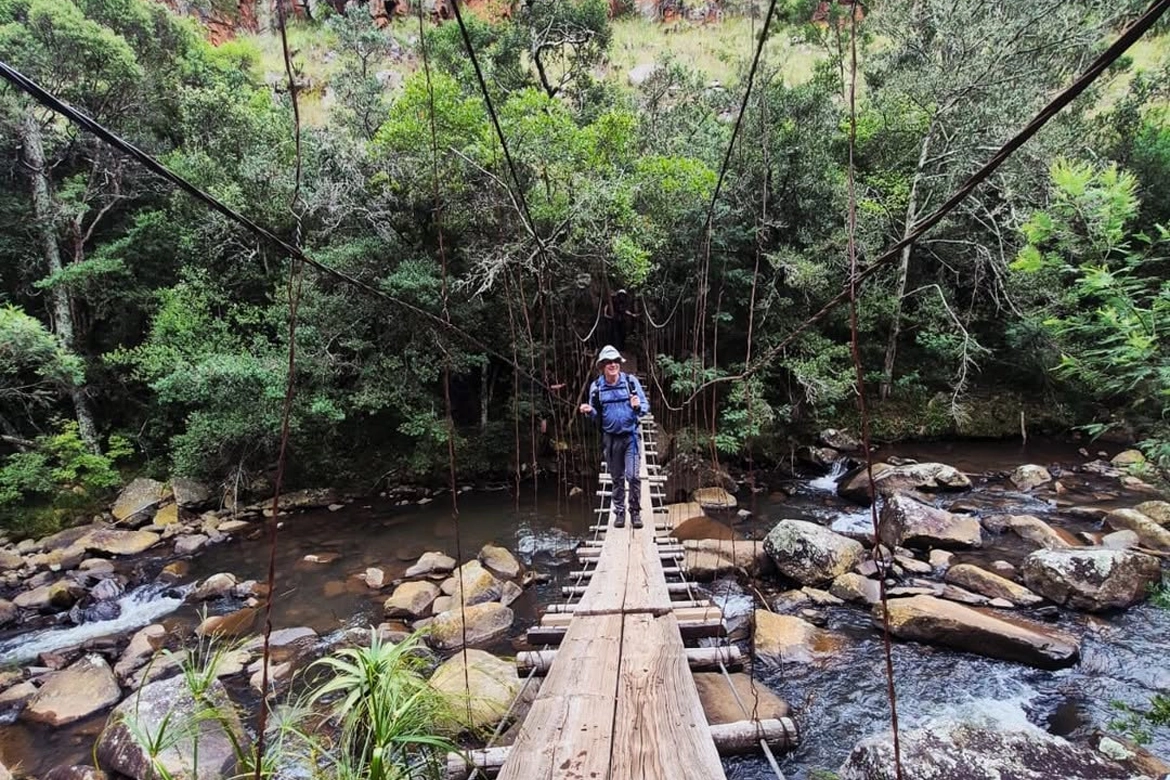
Most people who stay at Bermanzi come for the mountains, for the stunning trails that’ll take you down into gorges and climbing back out through yellowwood forest, for the sound of the Uitkoms waterfall carrying through the trees, and for the most restful nights’ sleep.
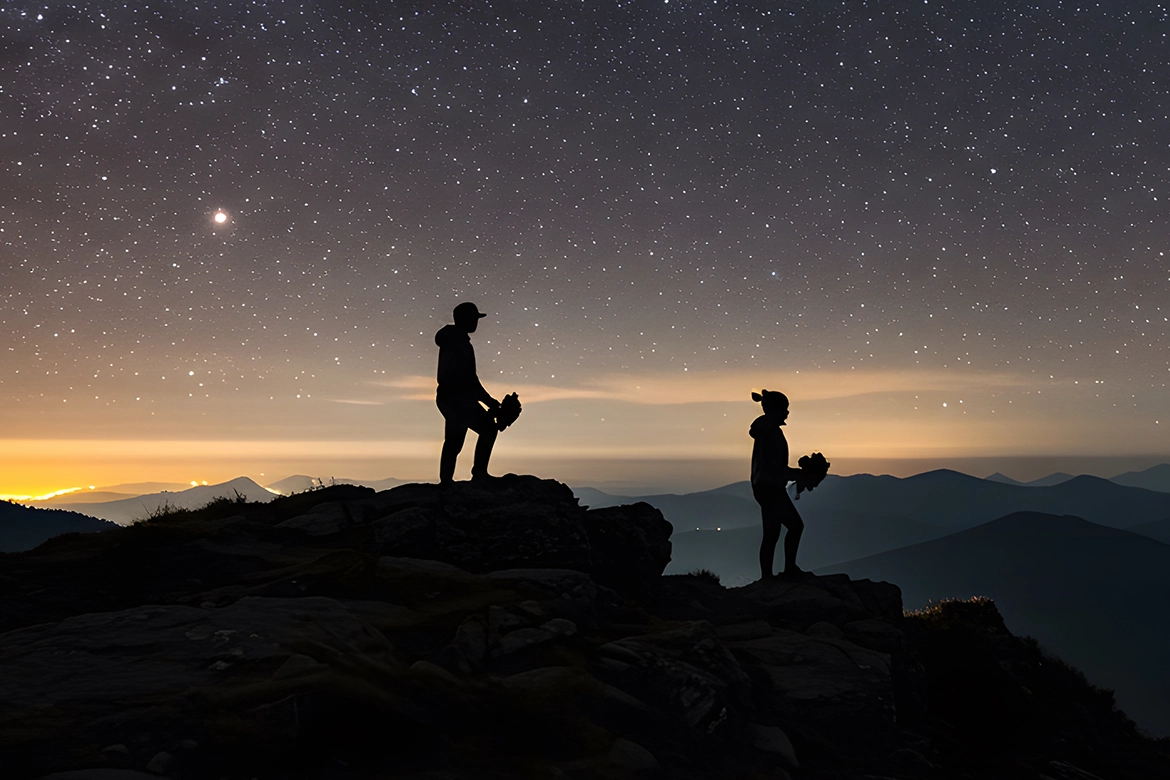
Bermanzi is also one of the best places in the province to enjoy a spot of stargazing.
The escarpment edge between Machadodorp, Waterval Boven, and Badplaas is, without any deliberate design, one of the finest natural stargazing sites in Mpumalanga.
With no ambient light from a nearby city, no industrial development on the surrounding horizon, the Komati River valley dropping away below, the mountains rising behind, and above everything, a sky so thickly starred that first-time visitors regularly stand in the cold gazing at the heavens for far longer than they expected to.
High Up in the Mountains
Bermanzi sits on the edge of the Drakensberg escarpment, in the northern reaches of the range, at an altitude that places it well above the hazy, humid air of the Lowveld below.
The air is thinner, cleaner, and in winter, cold enough to be almost crystalline.
Light pollution, the other great enemy of the night sky, is essentially absent here. The nearest towns are small, the surrounding land is largely uninhabited, and the farm itself generates very little artificial light.
This combination, altitude plus darkness, is what separates a sky you admire from a sky you actually read.
What You’ll See in The Southern Sky
The Southern Hemisphere carries celestial objects that no observatory in the Northern Hemisphere can ever properly see.
From any open clearing on the property, the Southern Cross sits above the southern horizon like a landmark you eventually learn to navigate by.
Near it, Alpha Centauri glows steadily: the closest star system to our own sun, 4.37 light years distant, and completely unremarkable in appearance until you know what you are looking at.
The Milky Way at this elevation and in this darkness does not resemble the faint smear that city dwellers occasionally see through suburbs. It is a physical structure, dense and layered, arching from one horizon to the other with the galactic core, in winter and spring, sitting almost directly above the valley. The Scorpius constellation lies along it like a question mark. Omega Centauri, a globular cluster containing approximately ten million stars, is visible to the naked eye as a soft, slightly blurred point of light near the horizon.
These are not features that require a telescope. They require only darkness, time, and the patience to let your eyes adjust fully, which takes about twenty minutes and rewards the wait considerably.
The Best Time to Stargaze at Bermanzi
Winter is when the escarpment sky performs at its best.
From May through to September, the air is dry, the Milky Way core rises early, and the absence of summer cloud cover means clear nights are reliably clear rather than interrupted by the thunderstorms that move through from October onwards.
Bermanzi in July at midnight is significantly colder than most Gauteng visitors expect, and the frost that settles on the grass by morning brings with it plenty of reasons to layer up and spend some time sitting like a dassie in the sunshine.
If you can be flexible with your planning, try to book your trip for around the new moon phase.
A full or near-full moon is beautiful but dramatically reduces the number of fainter objects visible, washing out the sky in a way that a streetlight never quite manages.
Some Extra Helpful Information
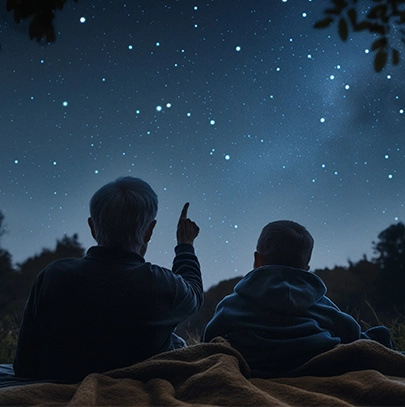
The free app Stellarium, available on any smartphone, identifies any object you point the camera toward in real time. It requires no prior knowledge and adds considerable depth to an hour spent looking up. Use it in night mode to preserve your eyes’ adjustment to the dark.
A red-light torch does the same job as a white one without destroying the dark adaptation your eyes have spent twenty minutes building. Most camping headlamps have a red-light setting. If yours does not, covering the lens with red fabric or tape is a reasonable alternative and one that every amateur astronomer uses eventually.
Allow the eyes time. The instinct on stepping outside is to look immediately and look quickly. The sky that reveals itself after five minutes is not the same sky that reveals itself after thirty. The difference, on a dark escarpment night at Bermanzi, is between seeing the bright stars and seeing everything else behind them.